Over the past few weeks, many taxpayers have received an SMS or email from the ITD saying their records show “overseas financial interests” that may need to be reported, along with a nudge to check the Foreign Assets of Small Taxpayers Disclosure Scheme (FAST-DS), 2026.
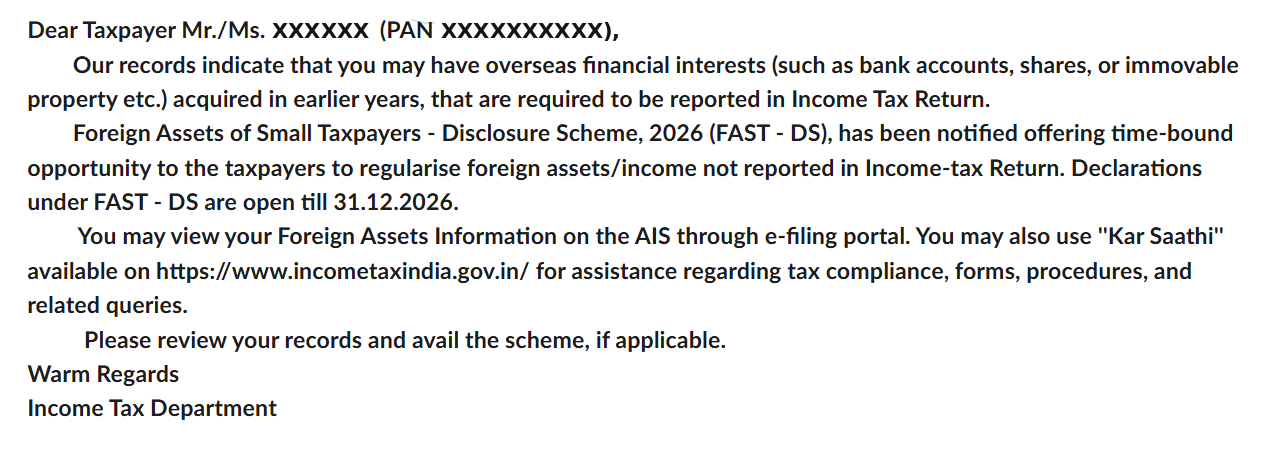
If you’ve already worked out that the scheme applies to you, the next question is practical: where is the form, and how do you file it? Form 1, the declaration form under FAST-DS, is now live on the e-filing portal, and the window stays open till 31st December 2026.
Before you start: keep these ready
Filing goes much faster if you sort this out first. Form 1 asks for asset-level details as below:
- Foreign Assets Information in your AIS (Annual Information Statement): check what the ITD already has on record
- Fair market value of each asset as on 31st March 2026, worked out as per the scheme’s valuation rules
- Supporting documents: bank statements, brokerage statements, purchase deeds, RSU or ESOP grant letters, and valuation reports where applicable
- Your residential status in the year each asset was acquired or the income was earned
Not sure whether you qualify, or which category your asset falls in? Read our explainer on FAST-DS 2026: Foreign Assets Disclosure Scheme for Small Taxpayers first.
Steps to file Form 1 under FAST-DS 2026
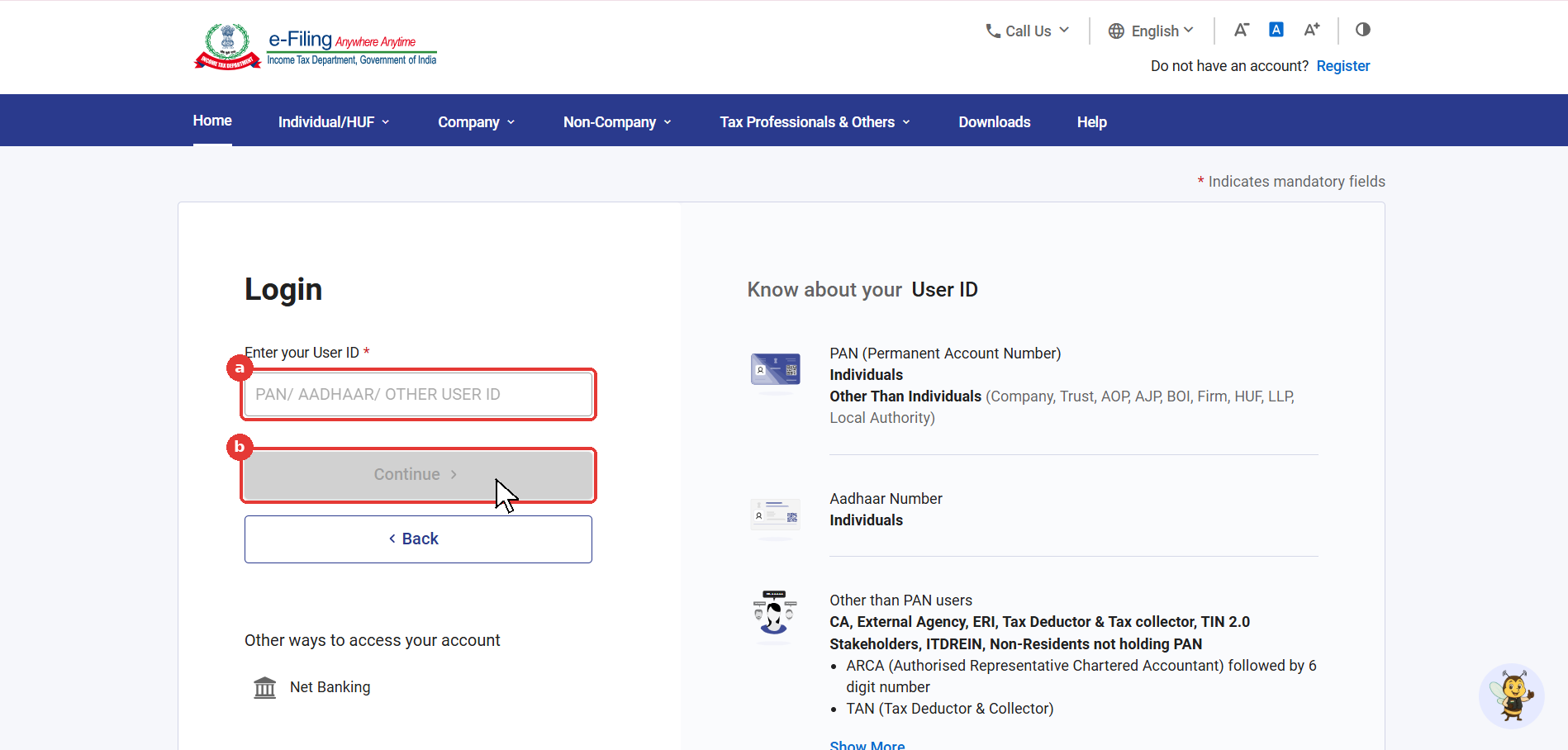
Step 1: Log in to the e-filing portal
Go to the income tax e-filing portal and log in with your PAN (or Aadhaar) and password.
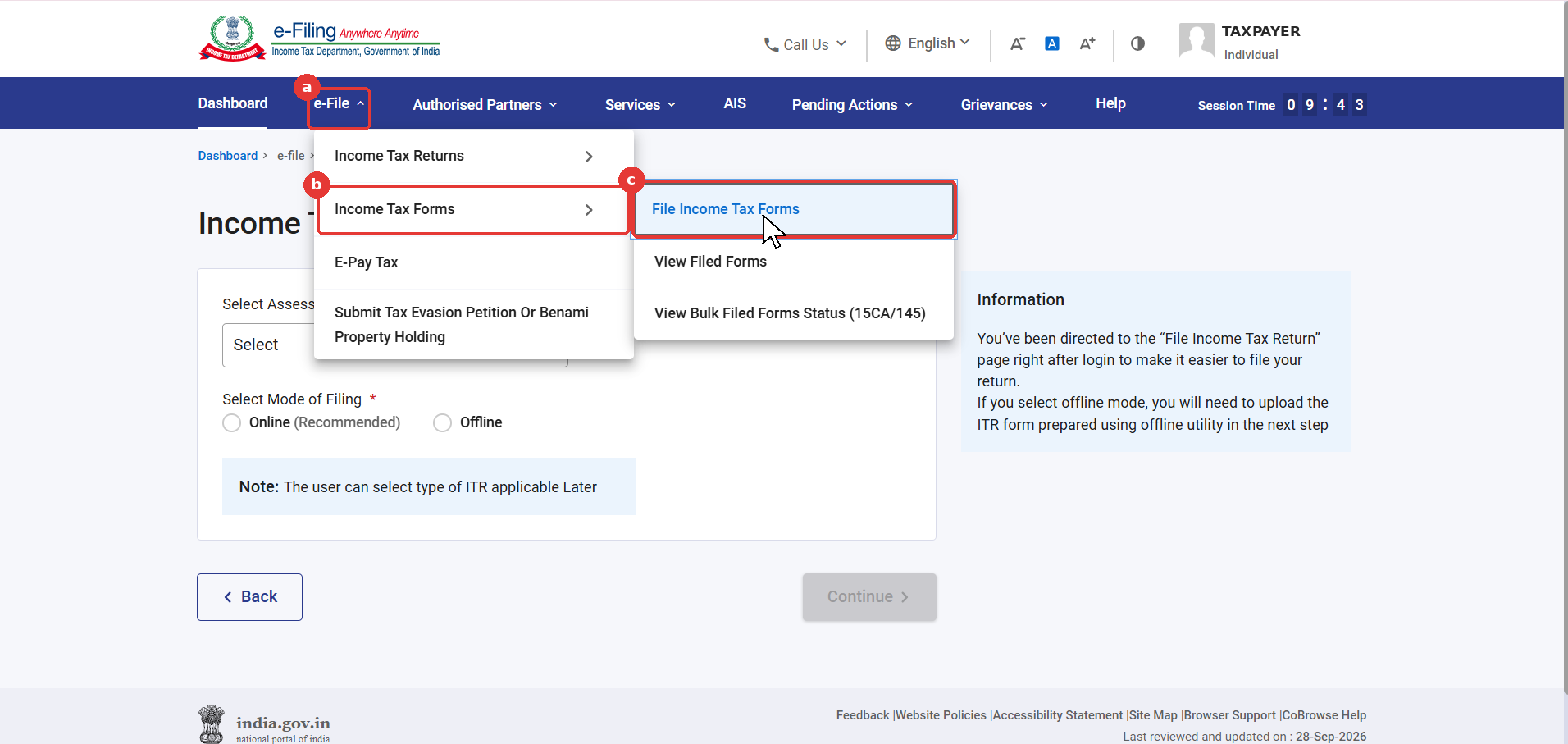
Step 2: Open the Income Tax Forms section
From the top menu, go to e-File > Income Tax Forms > File Income Tax Forms.
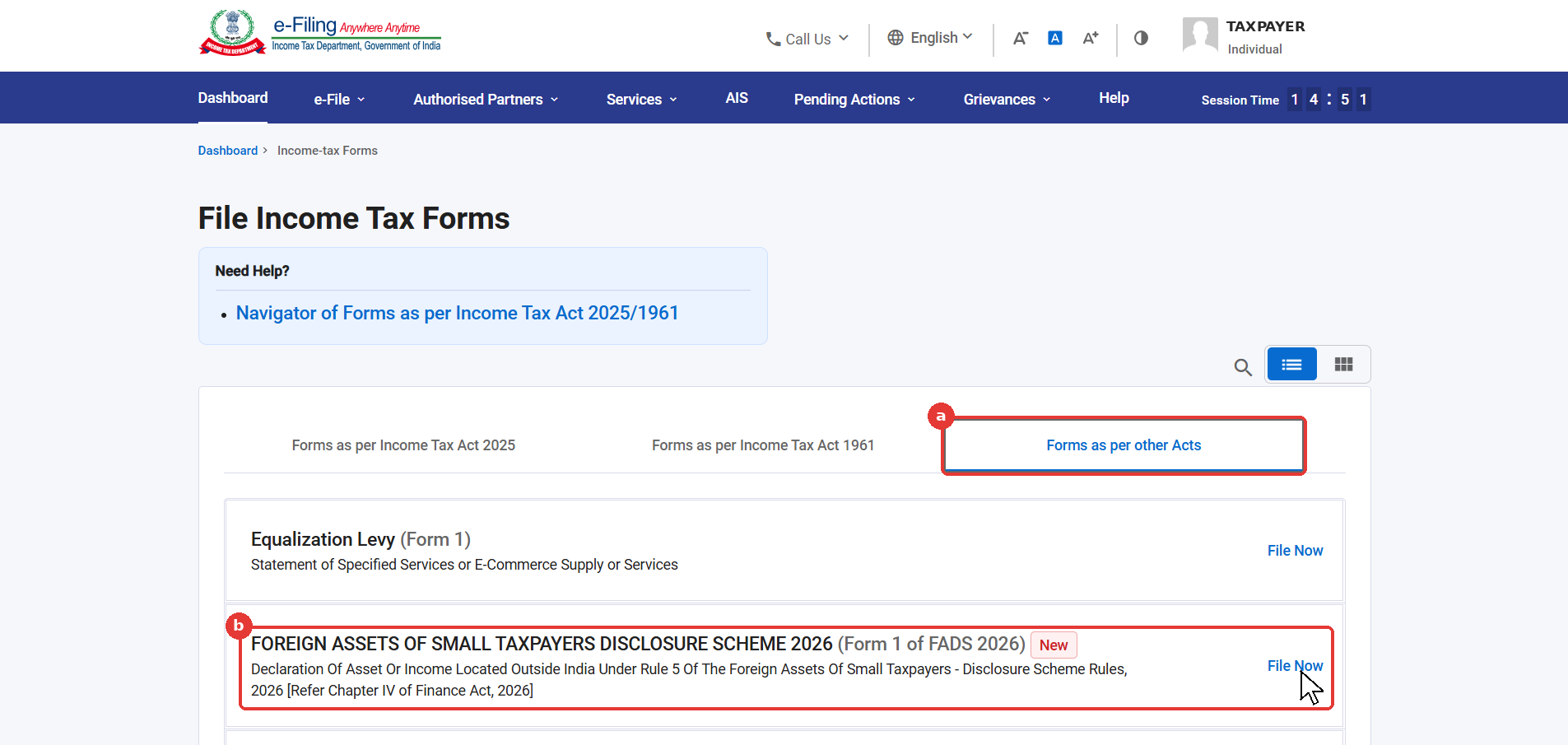
Step 3: Select the FAST-DS form
On the File Income Tax Forms page, click the Forms as per other Acts tab. Select Foreign Assets of Small Taxpayers Disclosure Scheme 2026 (Form 1 of FADS 2026) and click File Now.
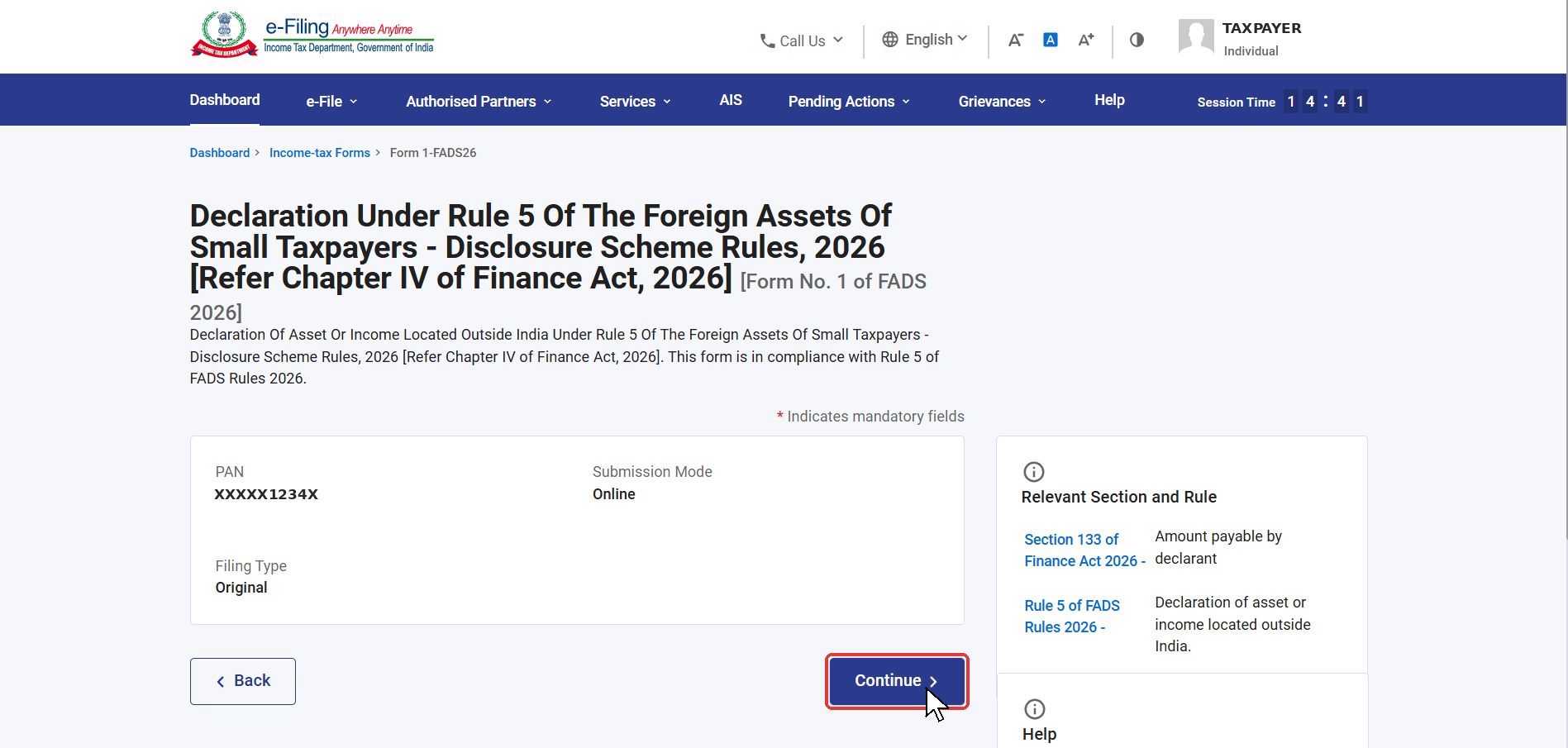
Step 4: Confirm your details
The portal shows your PAN, Submission Mode (Online) and Filing Type (Original). Check these and click Continue.
Step 5: Click “Let’s Get Started”
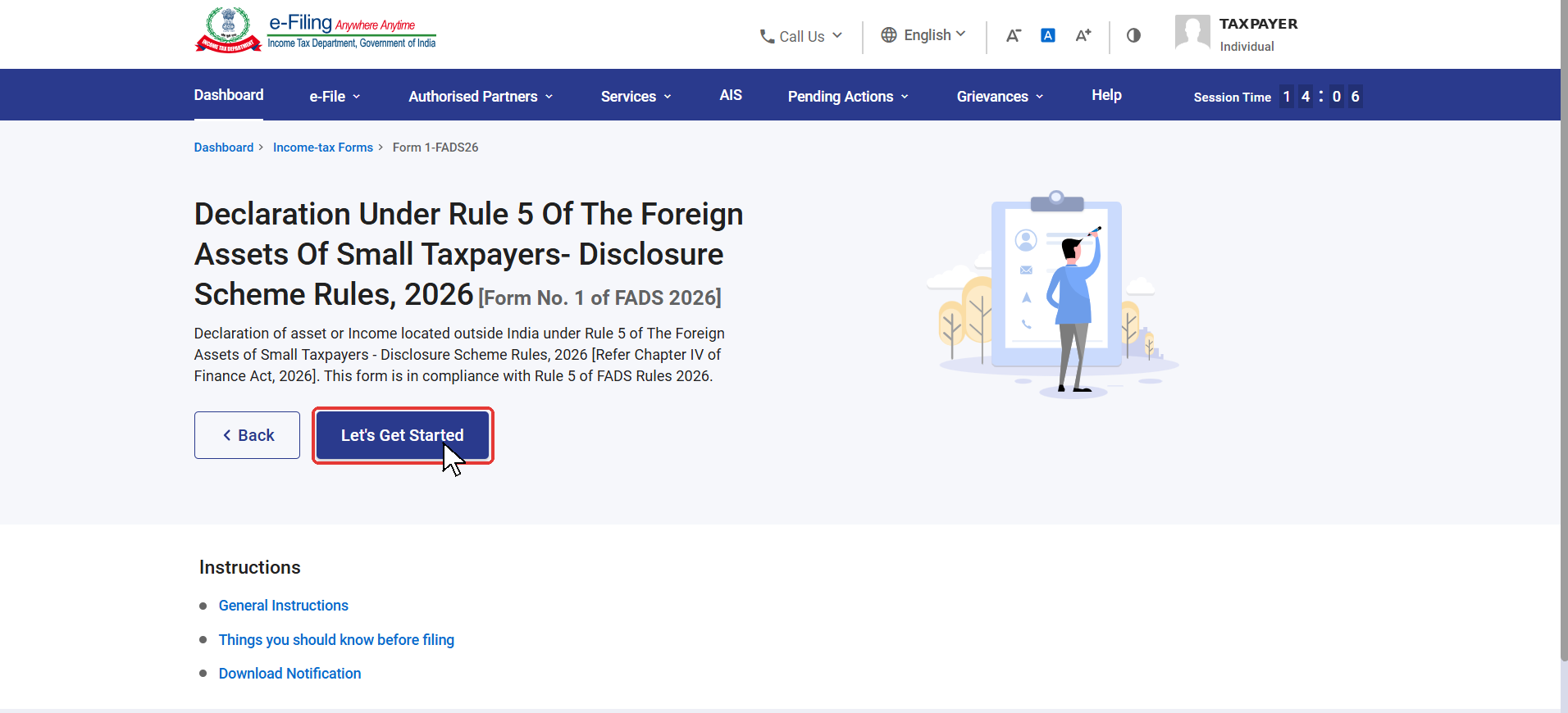
This page also links to the General Instructions, Things you should know before filing, and the notification itself. Worth a quick read if this is your first time, then click Let’s Get Started.
Step 6: Fill in each section and click Preview
The form is split into sections. Part A is pre-filled from your profile, and you fill the rest.
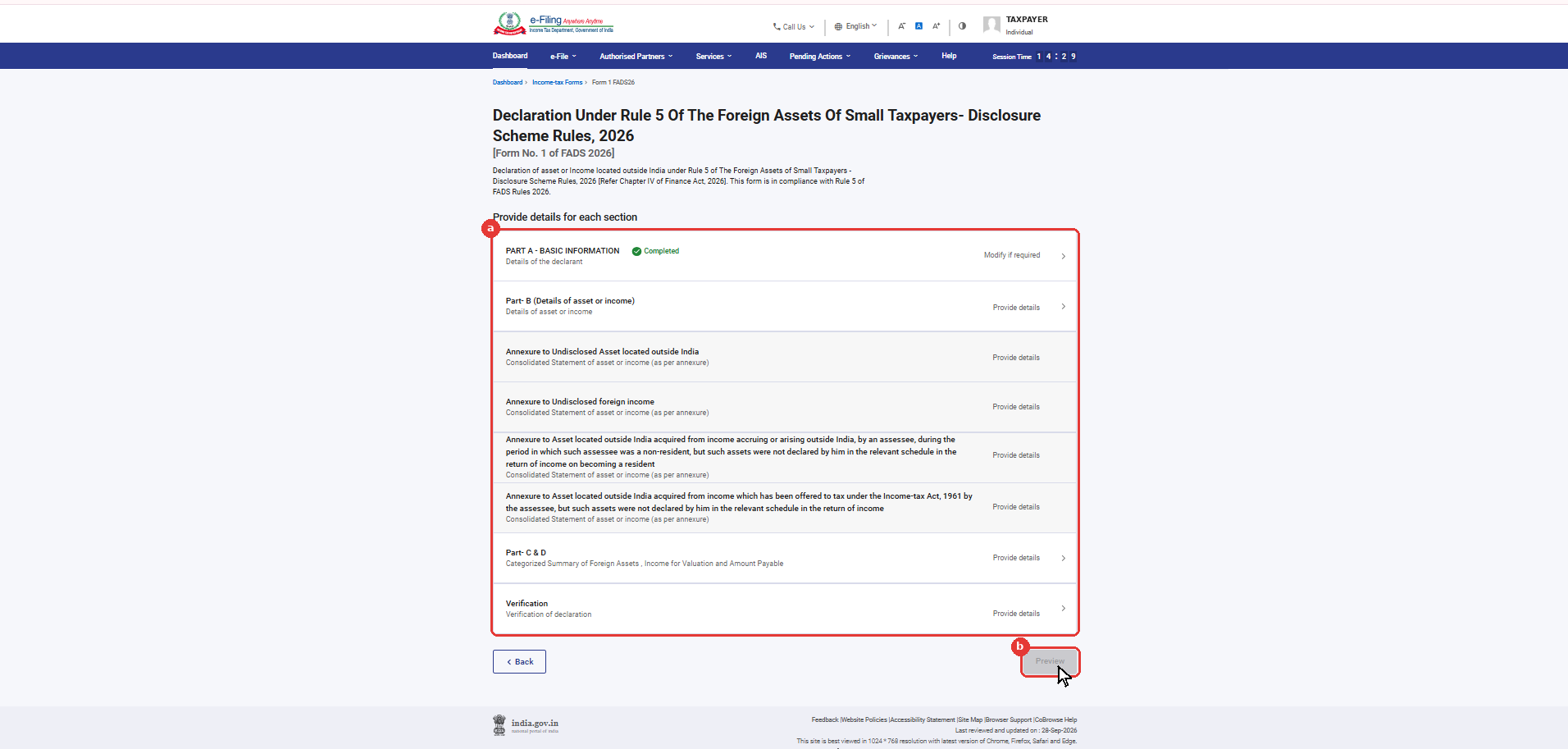
| Section | What you fill in |
|---|---|
| Part A: Basic Information | Details of the declarant. Pre-filled, modify if required |
| Part B: Details of asset or income | Details of each foreign asset or income being declared |
| Annexures (4 types) | A consolidated statement of assets or income, in the annexure that matches your case (see table below) |
| Part C & D | Categorised summary of foreign assets, income for valuation, and amount payable |
| Verification | Verification of the declaration |
Once every section is complete, the Preview button becomes active. Click it and review the full declaration.
Step 7: Submit the declaration
Check the preview carefully, especially asset values and the amount payable in Part C & D. Then submit the form. Download the acknowledgement for your records.
Which annexure should you use?
This is where most people get stuck. The annexure you pick decides the category, and the two categories carry very different costs.
| Annexure | When it applies | Category and cost |
|---|---|---|
| Undisclosed asset located outside India | A foreign asset with no satisfactory explanation of its source | Category 1: 30% tax + 30% fee (60% of value), up to ₹1 crore |
| Undisclosed foreign income | Foreign income that was never offered to tax | Category 1: 30% tax + 30% fee (60% of value), up to ₹1 crore |
| Asset acquired while you were a non-resident, not declared after becoming resident | Asset bought from foreign income earned during your NRI years, but left out of Schedule FA once you became resident | Category 2: flat ₹1 lakh, up to ₹5 crore |
| Asset acquired from income already taxed in India, not declared in the schedule | Asset bought from income you had already paid tax on in India, but left out of Schedule FA | Category 2: flat ₹1 lakh, up to ₹5 crore |
Say you worked in the US for five years, bought US stocks from your salary there, and moved back to India. After you became a resident, those stocks were never reported in Schedule FA of your ITR. That’s the third annexure: a Category 2 declaration with a flat fee of ₹1 lakh, as long as your total Category 2 assets stay within ₹5 crore.
You can declare multiple assets, and different asset types, in a single Form 1. Each annexure lets you add as many entries as you need.
What happens after you file Form 1?
Filing Form 1 is only the first step. The rest of the process runs through the portal.
| Step | Form | What happens | Timeline |
|---|---|---|---|
| 2 | Form 2 | ITD issues an order with the exact amount payable | Within 1 month from end of the month you filed Form 1 |
| 3 | Form 3 | You pay and submit proof of payment | Within 2 months from end of the month Form 2 is received |
| 4 | Form 4 | ITD certifies the payment and grants immunity | Within 1 month from end of the month Form 3 is received |
Miss the payment deadline in Step 3? You get a further two months with simple interest at 1% per month. Beyond that, the scheme benefit is lost for that declaration.
Key things to remember
- The last date to file Form 1 is 31st December 2026, with no provision for extension
- Pick the annexure carefully: an asset bought from already-taxed income or during your NRI years costs a flat ₹1 lakh, not 60% of its value
- Values in Part C & D must match your valuation as on 31st March 2026, and supporting documents are needed upfront.
Stuck on a specific section of the form? Drop your question below.